
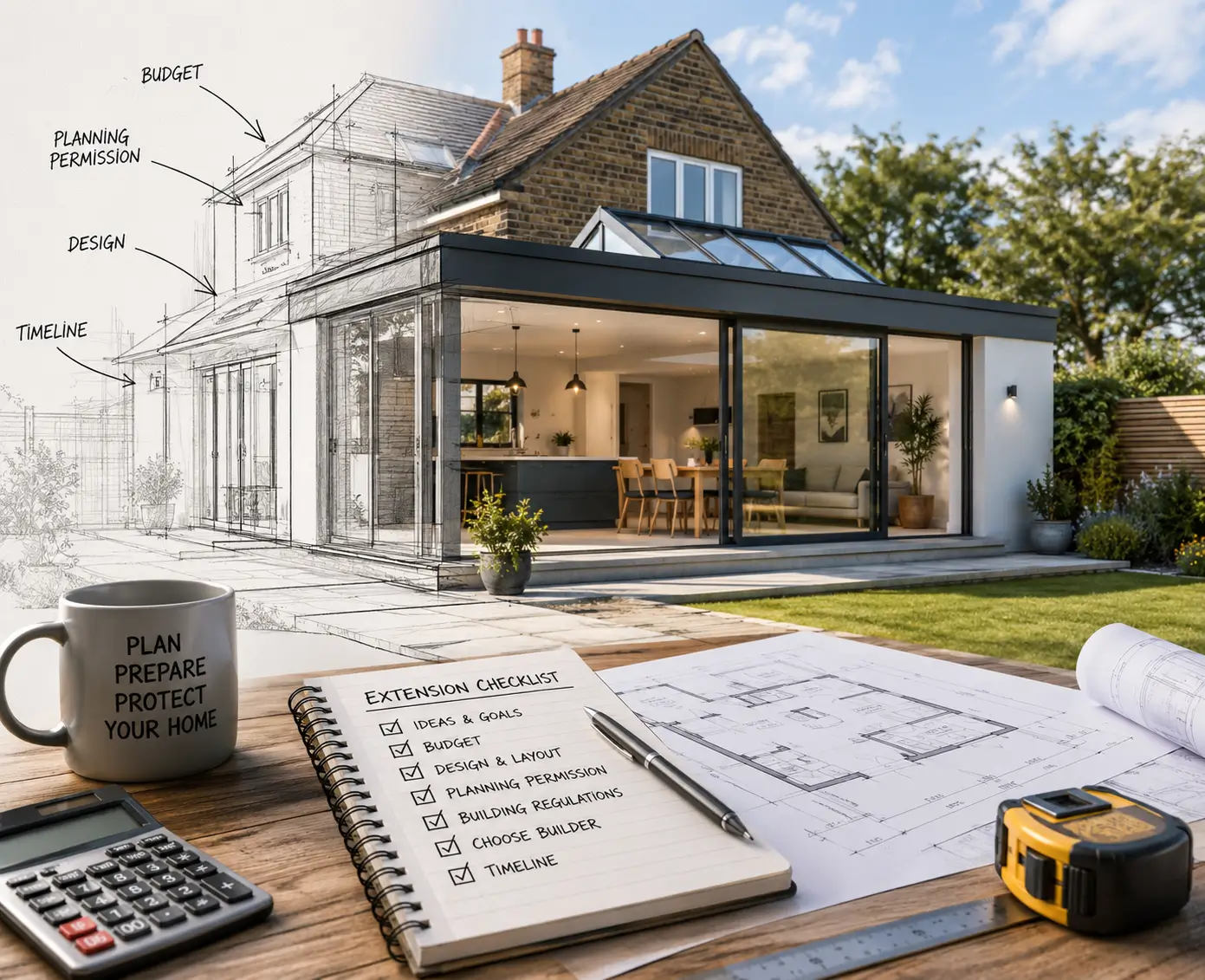
Moving to a larger property is not always the best solution when a family begins to outgrow its home. For many homeowners, extending an existing property offers a more practical and cost-effective way to gain additional living space while remaining in a familiar neighbourhood. Whether it’s a rear extension to create an open-plan kitchen, a loft conversion to add an extra bedroom or a garage conversion into a home office, carefully planned home projects can dramatically improve both everyday living and the long-term value of a property.
However, successful extensions do not happen by chance. They require careful planning, realistic budgeting and the support of experienced professionals who understand every stage of the building process. While television renovation programmes often make major projects appear straightforward, the reality is that good preparation is what separates a successful project from one that becomes stressful and expensive.
Before making any decisions, homeowners should take time to understand exactly what they want to achieve. Is the objective to create more family space, increase the property’s value, improve natural light or simply modernise the way the home functions? Establishing clear goals from the beginning makes every later decision much easier.
Begin With a Detailed Plan
Every successful home project starts with a well-prepared plan rather than rushing into construction work. Spending time developing ideas often saves both money and frustration later.
Consider how the new space will be used every day. A kitchen extension should improve movement between cooking, dining and living areas, while a loft conversion should provide practical storage and comfortable access. Simply adding square footage without improving functionality rarely delivers the best results.
It is also important to think about how the extension will connect with the existing property. The transition between old and new spaces should feel natural, using similar floor levels, ceiling heights and architectural details wherever possible. A poorly integrated extension can feel like an afterthought, whereas a carefully designed addition often appears as though it has always been part of the house.
Natural light should also be a major consideration. Roof lanterns, bi-fold doors, larger windows and carefully positioned glazing can transform new living spaces while reducing the need for artificial lighting during the day.
Finally, consider the outside of the property. Matching brickwork, roof tiles and external finishes helps maintain the home’s character while improving kerb appeal.
Budget for More Than the Building Work
One of the most common mistakes homeowners make is budgeting only for the visible construction work. In reality, many additional costs should be considered before a project begins.
Architectural drawings, structural engineering, planning applications where required, building regulations, surveys and utility connections may all form part of the overall project. Internal decorating, flooring, landscaping and new furniture should also be included within the budget to avoid unpleasant surprises towards the end of the build.
Setting aside a contingency fund is highly recommended. Even well-planned projects can uncover unexpected issues such as drainage problems, outdated wiring or structural repairs that only become apparent once work starts. Having additional funds available allows these issues to be resolved without delaying the project.
Obtaining detailed quotations from reputable contractors helps ensure everyone is pricing the same scope of work. Comparing quotations based purely on price can be misleading if different builders have included different specifications or excluded important items.
Choosing the Right Builder Is Critical
The quality of the finished project depends heavily on the builder carrying out the work. Experience, communication and attention to detail are often far more valuable than simply selecting the lowest quotation.
Before appointing a contractor, homeowners should ask to see examples of recently completed projects that are similar in size and complexity. Speaking to previous clients can also provide valuable insight into reliability, workmanship and how unexpected challenges were handled during construction.
Good communication is essential throughout the build. Regular progress meetings allow questions to be answered quickly while ensuring any changes are agreed before additional work takes place. Small misunderstandings can become expensive if left unresolved.
Quality builders also understand the importance of protecting the existing property during construction. Dust control, site safety, waste removal and maintaining access all contribute towards a smoother experience for homeowners continuing to live in the property during the works.
Think About Long-Term Value
The best home projects improve daily life while also increasing the property’s long-term appeal. Extensions that create flexible living spaces, improve energy efficiency and maximise natural light tend to perform particularly well when the property is eventually sold.
Open-plan kitchen extensions remain highly desirable because they provide versatile family living areas that suit modern lifestyles. Loft conversions can add valuable bedrooms, while garage conversions create flexible spaces for home offices, gyms or playrooms.
Future maintenance should also influence design decisions. Choosing durable materials, energy-efficient glazing and quality insulation may increase the initial investment slightly but often delivers savings through lower running costs and reduced maintenance over many years.
Ultimately, a successful home extension is about much more than adding extra space. It is an opportunity to improve the way a property functions, increase comfort and create a home that better reflects the needs of the people living there. With careful planning, realistic budgeting and the right professional team, homeowners can complete projects that provide lasting enjoyment while adding genuine long-term value to one of their most important investments.